
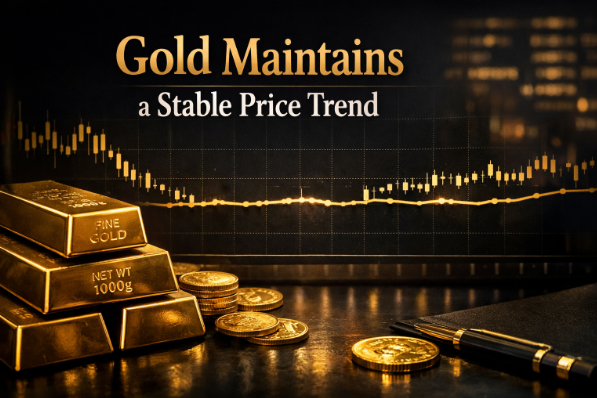
Gold Maintains a Stable Price Trend
Gold has a weird superpower in modern markets: it can feel dramatic even when it’s doing almost nothing. On 10-03-2026, that “almost nothing” is exactly the point. While equities swing on earnings whispers and crypto jolts on sentiment, gold price action has been notably measured—less fireworks, more metronome. For investors and everyday savers alike, a stable gold price trend can be more than a lull; it can be a signal. Stability in gold often reflects a market that’s still nervous enough to keep a hedge—but not panicked enough to sprint into it.
This blog unpacks what “stable” really means in the gold market, why it can happen even when headlines are loud, and how traders, long-term investors, and central banks interpret it. We’ll look at the main drivers—US dollar strength, interest rates, inflation expectations, geopolitical risk, and central bank gold buying—and explain why gold can hold a steady range while other assets behave like caffeinated squirrels. We’ll also cover practical insights: what this kind of trend suggests for portfolio diversification, whether gold ETFs and physical bullion behave differently, and how to think about gold’s role in 2026 without relying on hype or doomscrolling.
What a “Stable Price Trend” in Gold Actually Looks Like
A stable gold price trend usually means gold is trading within a relatively tight range over days or weeks, with fewer sharp spikes and pullbacks than usual. In technical analysis terms, you’ll often see sideways consolidation, where support and resistance levels hold and momentum indicators flatten. This can appear as a “range-bound market,” where buyers step in at predictable levels and sellers appear at predictable ceilings.
Stability doesn’t mean gold is “dead.” It often means the market is waiting for clarity. Gold is exceptionally sensitive to macro forces—especially real yields (interest rates after inflation), currency moves, and risk sentiment. When those forces offset one another, gold can enter a balanced equilibrium: enough demand to prevent breakdowns, enough supply-taking (profit-taking) to prevent breakouts. That’s not boring—it's information. Markets love to hide their intentions inside their quiet phases.
Why Gold Can Stay Calm When the World Isn’t
Gold’s reputation is built on crisis behavior, but its daily price is shaped by arithmetic: rates, inflation, and the dollar. If inflation expectations cool while interest rates remain relatively firm, gold can face headwinds (because higher yields raise the opportunity cost of holding a non-yielding asset). At the same time, if geopolitical uncertainty stays elevated—or if central banks continue accumulating gold reserves—demand can remain strong enough to support prices. The result is a kind of tug-of-war that produces a stable range.
Think of gold as the market’s “insurance premium.” When investors perceive risk but don’t know which risk will dominate—recession risk, inflation risk, currency risk, or geopolitical risk—gold tends to be held steadily rather than traded aggressively. That can keep the spot gold price resilient without sending it into a runaway rally.
The Interest Rate Factor: Real Yields Matter More Than Drama
If you want one macro lever that repeatedly shows up in gold discussions, it’s real interest rates. Gold doesn’t pay interest; bonds do. When real yields rise, gold can struggle because investors can earn attractive inflation-adjusted returns elsewhere. When real yields fall or turn negative, gold often benefits because it becomes comparatively more attractive as a store of value.
In a stable gold price trend, real yields are frequently moving—but not decisively. Markets may be pricing a “higher for longer” environment with pockets of uncertainty about growth. That ambiguity can keep gold supported while also capping aggressive upside moves. This is one reason gold can remain steady even when the financial news cycle looks like it’s trying out for a reality show.
The US Dollar Connection: Currency Gravity and Gold’s Global Pricing
Gold is priced globally, but the US dollar acts like gravity. A stronger dollar typically pressures gold prices (in dollar terms) because it makes gold more expensive for non-dollar buyers. A weaker dollar can provide a tailwind.
Stability often appears when the dollar is also range-bound or when currency effects offset other drivers. For example, if the dollar strengthens modestly but inflation fears and risk hedging keep demand steady, gold can remain balanced. In that scenario, gold is less about “going up” and more about “refusing to go down,” which is a form of strength many investors underestimate.
Inflation Expectations: The Psychology of Purchasing Power
People often assume gold rises whenever inflation rises. Reality is more nuanced. Gold tends to respond not just to inflation prints but to inflation expectations—what the market believes about future purchasing power—and how central banks react.
When inflation is perceived as controlled but not fully defeated, gold can enter a stable phase. Investors may hold gold as a hedge against a resurgence of inflation without chasing prices higher. Meanwhile, if central banks are seen as credible and policy remains restrictive enough, that can limit speculative upside. The result is a steady gold price, supported by hedging demand and restrained by policy confidence.
Central Bank Gold Buying: The Quiet Giant in the Room
One of the most structurally important trends in recent years has been central bank gold purchases. Central banks don’t buy gold because it’s trendy; they buy it for reserves, diversification, and long-term confidence. Their buying tends to be persistent and less sensitive to short-term volatility than retail or speculative flows.
When central bank demand is consistent, it can create a “floor effect” under gold prices, contributing to stability. Even when investors take profits, longer-term buyers may step in. This doesn’t guarantee constant rallies—but it can help explain why gold often maintains a stable trend even when short-term traders are indecisive.
Safe-Haven Demand Without Panic: The Middle Gear of the Gold Market
Gold’s “safe haven” identity has multiple gears. In full panic, gold can spike. In complacency, gold can drift. In the middle—where uncertainty is elevated but not exploding—gold often stabilizes. That middle gear is where many markets live most of the time.
On 10-03-2026, the market mood can be described as “cautious but functional.” Investors are still mindful of market volatility, geopolitical risk, and the long tail of inflation narratives. Yet risk assets continue to attract capital when conditions look manageable. Gold’s stable trend fits this mixed climate: it remains relevant, but it isn’t the only story in town.
Technical Analysis Perspective: Consolidation Isn’t a Lack of Direction
From a charting standpoint, a stable gold price trend often shows up as consolidation near key levels. Traders watch areas where prices repeatedly bounce (support) and stall (resistance). When gold trades cleanly inside these bands, it can attract both buyers looking for controlled entries and sellers taking profits near the top of the range.
Importantly, consolidation can be a “pressure-building” phase. Volatility often compresses before expanding again. That doesn’t mean a breakout is guaranteed—markets don’t owe anyone a cinematic moment—but it does mean the quiet can precede a decisive move when a catalyst lands: a policy shift, a surprise inflation print, a currency break, or a sudden risk event.
Physical Gold vs Gold ETFs: Two Roads to the Same Mountain
For investors looking to participate, the route matters:
Physical gold (coins, bars, jewelry) appeals for tangibility, privacy, and long-term wealth preservation. It comes with premiums, storage considerations, and liquidity differences.
Gold ETFs offer convenience, liquidity, and easy portfolio integration. They can be ideal for tactical allocation or rebalancing.
In a stable gold trend, ETFs often reflect the broader market’s measured stance: inflows and outflows can be more muted than during major rallies or selloffs. Physical demand can remain steady as well, especially in regions where gold is culturally tied to savings and security. Together, these channels can help stabilize the market—different motivations, same underlying asset.
Gold in a Diversified Portfolio: Stability Is a Feature, Not a Bug
A common mistake is judging gold by the standards of growth assets. Gold isn’t designed to behave like a high-growth stock. It’s designed to behave like a portfolio hedge—a counterweight that can reduce drawdowns, diversify risk, and offer resilience when correlations flip.
When gold maintains a stable price trend, it can quietly do its job: holding value while other positions ride volatility. For many investors, that’s exactly the point. Stability also supports disciplined strategies like portfolio rebalancing, where you trim winners and add to laggards systematically. A stable gold allocation can serve as an anchor in that process, helping investors avoid emotional decisions.
What Could Disrupt Gold’s Stability in 2026?
Even steady markets sit on moving parts. Several catalysts can push gold out of a stable range:
A sharp move in interest rates or real yields (especially if policy expectations reset quickly).
A meaningful US dollar breakout—up or down.
Surprising inflation data that changes expectations, not just headlines.
Geopolitical escalation that triggers global risk-off behavior.
Large shifts in central bank policy or reserve strategy.
Sudden shifts in ETF flows driven by institutional positioning.
Stability is often a snapshot of balanced forces. When one force overwhelms the others, the range can break. Investors don’t need to predict the exact trigger to be prepared; they just need to understand what typically moves gold and ensure their exposure matches their risk tolerance.
Practical Takeaways for Investors Watching Gold Today
If you’re tracking gold on 10-03-2026 and noticing steady price behavior, here’s the sane interpretation: the market is pricing a world where hedging still matters, but urgency is limited. That can be a rational place to be.
If you’re a long-term investor, a stable gold trend can be a signal to focus on process over prediction: choose a target allocation, rebalance periodically, and avoid chasing short-term moves. If you’re a trader, consolidation can be a strategy environment: define clear levels, manage risk tightly, and respect that range-bound markets punish impatience.
And if you’re simply trying to preserve purchasing power, gold’s stability can be reassuring. It suggests that—even as narratives compete for attention—gold continues to function as a globally recognized store of value with deep liquidity and persistent demand.
Conclusion: The Quiet Strength of a Stable Gold Price Trend
Gold doesn’t always need to roar to matter. Sometimes its most meaningful statement is a refusal to be pushed around. A stable gold price trend reflects a market that’s balancing inflation uncertainty, policy expectations, currency dynamics, and risk sentiment in real time. In 2026, that balance can be interpreted as cautious confidence: investors still value hedges, still worry about macro surprises, and still want diversification—without collectively sprinting into defensive positions.
Gold’s steadiness today is not an absence of signal; it is the signal. It tells you the market is still listening for the next big cue. And in finance, the listening moments are often when smart positioning happens—quietly, patiently, and with fewer regrets.
SEO Keywords Paragraph: gold price trend, stable gold price, gold market analysis, spot gold price, gold price forecast 2026, invest in gold, buy gold online, gold investment strategies, gold as a hedge, inflation hedge gold, safe haven asset, portfolio diversification gold, gold vs US dollar, real yields and gold, interest rates impact on gold, central bank gold buying, gold ETFs, physical gold bullion, precious metals investing, market volatility hedge, long-term gold investment, gold technical analysis, gold consolidation pattern, global economic uncertainty, wealth preservation strategies.