
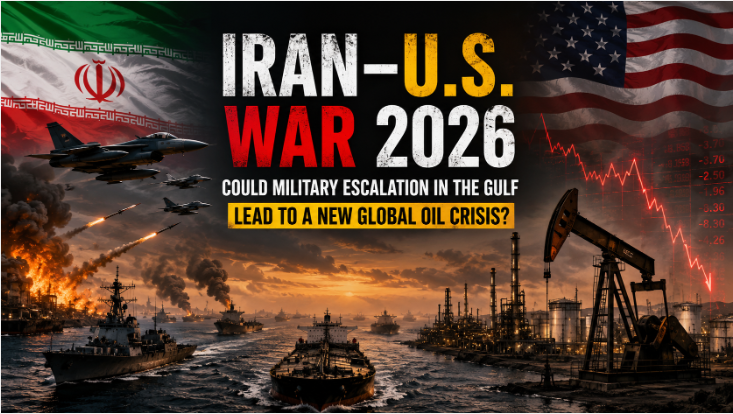
Iran–U.S. War 2026: Could Military Escalation in the Gulf Lead to a New Global Oil Crisis?
On June 10, 2026, the escalation between Iran and the United States became the most searched topic globally after the largest exchange of direct military strikes since the April ceasefire. Global markets declined, oil prices rose, and fears of a possible closure of the Strait of Hormuz returned to the forefront. ([Reuters][1])
1. Why is the Iran–U.S. war topping search results today?
Because the Islamic Revolutionary Guard Corps announced attacks against a U.S. base in Jordan and other targets in the Gulf, in response to U.S. strikes that targeted Iranian air defense and radar sites near the Strait of Hormuz. This development was considered the most dangerous direct escalation between the two sides in months. ([Reuters][1])
2. What happened in the Strait of Hormuz?
The United States announced that it carried out strikes against Iranian sites near the strait after a U.S. helicopter was shot down. In response, Iran announced retaliatory operations against U.S. targets in the region. The importance of the Strait of Hormuz lies in the fact that it is one of the world’s most critical energy corridors, and any threat to it immediately affects global oil markets. ([Reuters][1])
3. Will oil prices rise further?
So far, Brent crude has risen to around $92 per barrel, but markets have not yet priced in the scenario of a complete supply disruption. Experts warn that any targeting of oil infrastructure or an actual closure of the strait could push prices to much higher levels. ([Reuters][1])
4. How has the crisis affected global markets?
Asian stocks fell sharply:
The MSCI Asia Index dropped by around 3%
Japan’s Nikkei Index declined by 2%
South Korea’s KOSPI fell by nearly 7%
AI and technology stocks also came under additional pressure due to global uncertainty. ([Reuters][1])
5. Could the crisis turn into a wider war?
There is no confirmation of that at the moment, but analysts believe the real risk lies in the expansion of targets to include energy facilities or international shipping routes. So far, investors are treating the crisis as a “geopolitical risk” rather than a full-scale war. ([Reuters][1])
6. How does the Iran–U.S. war affect people around the world?
If the escalation continues, it could affect:
Fuel prices
Shipping costs
Food prices
Inflation rates
Airline ticket prices
Stock markets and investments
This is why terms such as Iran, America, oil, Strait of Hormuz, gasoline prices, Gulf war have become among the most searched phrases worldwide today. ([Reuters][1])
Conclusion
The Iran–U.S. crisis in June 2026 is not merely a military event; it is a global issue affecting energy, the economy, and financial markets. With oil prices rising and tensions returning to the Gulf, the world is watching to see whether the escalation will remain limited or turn into a larger crisis that affects the entire global economy. ([Reuters][1])
Strongest Keywords for This Blog
Iran–U.S. War 2026, Iran today, United States and Iran, Strait of Hormuz, oil prices today, Brent crude, Gulf War, Iran US conflict, Strait of Hormuz, oil prices, Middle East crisis, Iran attack, US military strike, global oil market, Gulf tensions.