
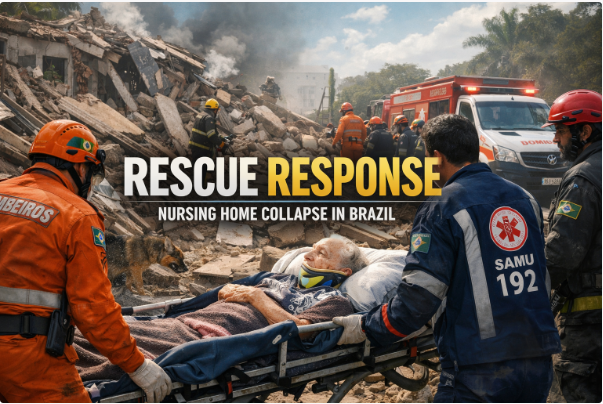
Post-Collapse Rescue Response at a Nursing Home Facility in Brazil
The morning the grid failed, it didn’t feel like “collapse.” It felt like one more power outage—annoying, inconvenient, familiar. In Brazil, the lights flicker sometimes; the generators hum; people adapt. But this time the outage didn’t heal by lunchtime. It didn’t stabilize by nightfall. It spread—through cities and inland towns, across supply chains, through the invisible tunnels that keep modern life breathing: fuel logistics, water treatment, telecom networks, medication distribution, and the daily staffing patterns that make elder care possible. In a nursing home facility—an institution designed for stability and routine—instability is not a dramatic plot twist. It’s a medical emergency with a thousand small fuses, each connected to a fragile body. When systems fail, older adults don’t get “delayed.” They get hypoxic. They get dehydrated. They get confused, agitated, septic, injured, or worse. A post-collapse rescue response at a nursing home is the kind of operation where heroism looks like a clean catheter, an improvised oxygen plan, a handwritten medication chart, and the stubborn decision to keep everyone alive until help can actually arrive.
This scenario begins with the nursing home’s baseline reality: a facility caring for dozens—sometimes hundreds—of residents with complex needs. Many are non-ambulatory. Some have dementia and wander risk. Others rely on regular insulin, anticoagulants, antihypertensives, anti-epileptics, or antipsychotics. Several may use oxygen concentrators, CPAP machines, suction devices, nebulizers, or feeding pumps. Even under normal conditions, the facility runs like a living organism: nursing shifts, dietary schedules, laundry cycles, pharmacy deliveries, lab pickups, maintenance checks, and transport to clinics. Now imagine that organism suddenly deprived of electricity, reliable water pressure, fuel access, food deliveries, and staffed transport. A “collapse” is not one thing; it’s a cascade. The rescue response must treat the cascade like a battlefield: triage the most lethal failures first, stabilize critical functions, and create a corridor of safety—physical, medical, and psychological—inside a structure that was never meant to function as an isolated fortress.
The first critical hours revolve around power and air. In a Brazilian nursing home, backup generators are common, but they’re not infinite. Fuel contracts presume a functioning economy; fuel trucks presume safe roads and payment systems. Even if a generator starts, the facility must decide what gets powered: refrigeration for insulin and temperature-sensitive medications, oxygen concentrators, minimal lighting, communication devices, water pumps, and perhaps one cooling or heating zone depending on region. In a hot climate, heat stress can turn deadly fast for older adults; dehydration, electrolyte imbalance, and cardiovascular strain arrive quietly and then all at once. Rescue teams—whether municipal civil defense, fire brigade, military units, or volunteer disaster relief—arriving to an elder care facility must instantly ask the most unromantic question in emergency management: “How long does your fuel last, and what is your load plan?” This is where good planning becomes visible. A facility that has a generator but no load priorities is like a hospital with no triage: expensive equipment, but no strategy.
In a post-collapse context, communication is often the second collapse. Phones fail when towers lose power or backhaul drops. Internet goes dark or becomes patchy. The nursing home’s ability to call for help may evaporate. That’s why rescue response in a worst-case Brazil scenario often begins not with a call for service, but with a welfare sweep: community reports, police patrols, neighborhood coordinators, or municipal emergency operations realizing that high-risk facilities—nursing homes, dialysis centers, orphanages—must be physically checked. When responders arrive, they’re walking into a facility already strained by staff anxiety. Many workers are worried about their own families, their commute safety, and whether they can even return for the next shift. Staff shortages are not hypothetical; they’re the default. So the rescue team’s first task is to create an incident command structure that doesn’t bulldoze the nursing staff but supports them: identify a facility lead (often the head nurse or administrator), designate a medical lead, assign logistics and security roles, and establish a communications plan that does not assume a working cell network. Radios, runners, posted schedules, whiteboards, and printed triage tags suddenly become high technology.
Then comes the human part: the residents. Older adults in crisis are not a monolith. Some will be lucid, frightened, and asking for information; others will be confused and interpret the chaos as personal threat. Dementia care becomes infinitely harder when routines shatter. A resident who normally tolerates care might resist, lash out, attempt to flee, or stop eating. A post-collapse rescue response must treat psychological stability as a medical intervention. Calm voices. Familiar caregivers where possible. Simple explanations repeated gently. A single “quiet zone” with consistent staffing can prevent an entire wing from spiraling into agitation, falls, and injury. In disaster medicine, the mind and body stop being separate categories; a panicked resident can dislodge IV lines, refuse oxygen, or wander into hazards. Containment is not about force. It’s about designing an environment where fear doesn’t metastasize.
Triage inside a nursing home looks different than triage on a highway. It’s slower, more intimate, and more ethically loaded. The rescue team must quickly identify who is most likely to die without immediate intervention and who can safely wait. Residents dependent on oxygen, insulin, dialysis schedules, or critical cardiac medications rise to the top. So do those with active infections, wounds, or recent surgeries. Dehydration risk is huge—especially if water supply becomes contaminated or pressure drops. Facilities may switch to stored water, but without resupply, that becomes rationing. Rationing in elder care isn’t a philosophical debate; it’s a logistics problem with faces. The rescue response should establish a hydration protocol: frequent small fluids, oral rehydration solutions, monitoring urine output, watching for confusion and low blood pressure, and prioritizing residents who cannot drink independently. If water safety is in question, the team must treat all water as potentially unsafe unless proven otherwise, using boiled water, chlorination, or vetted bottled sources. Gastrointestinal outbreaks can spread rapidly in congregate settings, and in older adults, diarrhea is not an inconvenience—it’s a dehydration sprint toward shock.
Medication continuity is the next monster in the room. In a post-collapse scenario, pharmacy deliveries may stop, electronic records may be inaccessible, and staff may be operating from memory and partial paper charts. Rescue response teams need to do three things fast: (1) lock down the existing medication inventory and prevent errors, (2) reconstruct the medication administration record (MAR) with whatever data exists—printed lists, prior delivery receipts, staff knowledge, family documentation—and (3) prioritize “must-not-miss” meds: insulin, anticonvulsants, corticosteroids, anticoagulants, certain cardiac meds, and essential psychiatric meds where withdrawal could trigger dangerous agitation. Cold-chain medications need refrigeration; if the generator can’t support it, improvised cooling becomes critical—coolers, ice runs, thermal insulation, and relocating meds to a powered site if evacuation is planned. The rescue team should also assume medication errors will rise under stress, so double-checks, simplified dosing schedules, and clear labeling become lifesaving.
In Brazil, geography and infrastructure diversity make each rescue operation unique. A coastal city might have quicker access to organized response and hospitals—until flooding or civil unrest blocks roads. An interior facility might have calm surroundings but no quick resupply and limited ambulance capacity. The collapse context also changes security assumptions. A nursing home is not a fortress; it may become a target for theft of fuel, food, or medications. Security is not about militarization; it’s about maintaining an ethical perimeter so fragile residents aren’t exposed to chaos. A responder with a calm, professional presence at entrances, controlled access for family members, and clear rules about supplies can prevent panic-driven breakdowns. Meanwhile, family reunification becomes a pressure cooker. Loved ones may arrive desperate, angry, or terrified, demanding to take residents home—even when doing so is medically risky. The rescue response must manage this with transparency: designate a family liaison, provide updates, document transfers, and—when possible—coordinate safe discharge for residents who can truly be supported at home.
Evacuation is the biggest decision and the hardest. Moving elderly residents is dangerous even on a good day. In a collapse, it’s a multi-variable gamble: destination capacity, transport safety, fuel availability, medical staffing during transit, and whether the new site can maintain care standards. Evacuation can save lives if the facility is failing—no water, no sanitation, no generator fuel, unsafe temperatures—but it can also kill vulnerable people through stress, falls, aspiration, medication disruption, and infection exposure. The rescue team must weigh shelter-in-place stabilization versus partial or full evacuation. Often the best approach is phased relocation: move the highest-acuity residents first to a hospital or a medical shelter; move stable residents to a partner facility, church shelter with medical supervision, or community center configured for elder care; keep a core group sheltering in place with enhanced resources. A realistic post-collapse plan includes the possibility that hospitals are overwhelmed. In that case, the rescue response must bring “hospital functions” to the nursing home: oxygen delivery, wound care, IV fluids where feasible, antibiotic protocols, and palliative care support for those who cannot be stabilized.
Sanitation, in collapse scenarios, becomes the quiet killer. Toilets require water. Waste removal requires functioning municipal services. When those systems fail, infections rise, skin breaks down, and dignity is assaulted. In elder care, pressure injuries (bedsores) can develop fast when staffing is thin and repositioning schedules collapse. Rescue teams should integrate a basic nursing home “survival” checklist: safe toileting alternatives, hand hygiene stations, waste segregation, laundry triage, bedding rotation, skin integrity checks, and enhanced fall prevention. With limited lighting, falls become more common; with anxious residents, wandering increases. Even simple interventions—battery lights in hallways, taped hazard markers, bed alarms, extra floor mats—can prevent fractures that would be catastrophic when surgical care is limited.
Food logistics is both nutrition and morale. Older adults are vulnerable to hypoglycemia, constipation, aspiration, and malnutrition. In a crisis, the menu shifts from “balanced nutrition” to “calories that can be safely swallowed.” Rescue response must ensure textures are appropriate for dysphagia (swallowing difficulty). Dehydrated foods require water—so they may be a trap. Shelf-stable foods are essential, but they must be usable: soft, low-sodium where possible, easy to portion, culturally acceptable, and safe for diabetics when possible. When options are limited, a pragmatic approach is to establish minimum nutrition targets and prevent acute harms: keep diabetic residents monitored, avoid sudden diet changes that destabilize warfarin users, and make sure constipation doesn’t become bowel obstruction in residents with limited mobility. The weird truth is that in post-collapse elder care, a cup of warm soup can be as strategic as a tank of diesel. It calms people. It restores routine. It signals that someone is still in charge of reality.
One of the most underrated parts of rescue response is documentation. In chaotic environments, memory becomes fiction. A nursing home rescue operation should create a paper-based continuity system: resident lists with identifiers, diagnoses, allergies, medications, baseline mobility/cognition, and emergency contacts. Triage categories. Interventions given. Transfers made. Missing items. Even a simple clipboard system can prevent tragedies like duplicated insulin doses, lost residents, or families searching the wrong shelter. Documentation also protects staff from accusations later and helps coordinate with external medical teams. In a collapse, “the record” becomes a tool for sanity.
As the response matures from hours to days, the mission shifts from immediate stabilization to sustained operations. Fuel becomes a procurement challenge. Water becomes a supply chain challenge. Staffing becomes a human endurance challenge. A good rescue team rotates duties to prevent burnout, integrates local volunteers carefully (with supervision and role clarity), and establishes predictable rhythms: medication times, meal times, hygiene rounds, rest periods, family update windows. Predictability is medicine for both dementia and trauma. It also helps responders avoid drifting into improvisation fatigue, where every decision feels like a new emergency.
A hard truth sits at the edge of this entire story: palliative care. In a true post-collapse scenario, not every resident can be saved, especially if advanced medical supports disappear. Ethical rescue response doesn’t pretend otherwise; it refuses abandonment while acknowledging limits. Pain control, comfort measures, dignity, and family presence—when safe—become the definition of care when curative options fail. This is not defeatism. It’s disaster ethics: triage is not just about who gets resources, but about ensuring that those who cannot be rescued are not discarded like broken machinery. A nursing home is a place where people live; rescue response must respect that the end of life is still life.
Brazil’s resilience culture—community solidarity, improvisation skill, strong local networks—can be a major asset in such a response. Neighborhood associations, faith communities, and local businesses can become lifelines for water, food, transport, and staffing support. But resilience is not magic. It needs coordination. In the best outcomes, responders treat the nursing home not as an isolated problem but as a node in a community survival map: coordinate with municipal emergency management, prioritize elder care facilities in fuel distribution, link them with functioning clinics, and integrate them into security patrol routes. If the collapse has a public order dimension, keeping elders safe and visible as a priority can stabilize the wider community—because nothing inflames rage faster than the perception that the weakest are being left to die.
In the end, “post-collapse rescue response” is a phrase that sounds cinematic, but the real work is relentlessly practical. It’s the discipline of asking: What will kill people today, and what can we prevent with the tools we have right now? In a nursing home facility in Brazil, those answers are usually mundane: oxygen, hydration, medications, sanitation, nutrition, fall prevention, and calm. The drama isn’t explosions; it’s whether a generator gets refueled before insulin warms, whether a confused resident is gently redirected before she falls, whether staff hold the line until reinforcements arrive, whether a paper medication list is accurate enough to stop a fatal dosing error. Civilization is a thin layer of habits and supplies. A nursing home is where that truth becomes brutally visible. And rescue, in this setting, is not a single moment of salvation—it’s a thousand small repairs, performed under pressure, to keep a fragile community alive in the long shadow of systems that used to work.
SEO keyword paragraph: post-collapse rescue response, nursing home facility Brazil, emergency response in Brazil, disaster preparedness for nursing homes, elder care crisis management, long-term care facility evacuation, humanitarian aid for seniors, geriatric emergency medicine, nursing home emergency plan, power outage generator fuel management, water sanitation in nursing homes, medication continuity during disasters, oxygen support for elderly patients, dementia care in emergencies, Brazil civil defense response, mass casualty triage for vulnerable populations, crisis logistics for long-term care, emergency medical shelter for seniors, resilient community disaster response, post-disaster nursing home recovery