
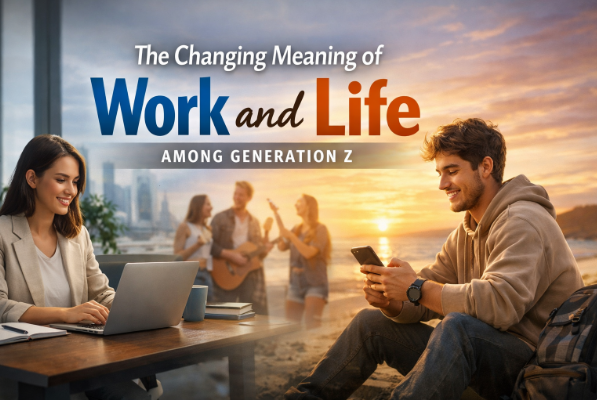
The Changing Meaning of Work and Life Among Generation Z
Work used to be a pretty straightforward bargain: you gave a company your time, the company gave you a paycheck, and—if you were lucky—stability. For Generation Z (roughly those born between the late 1990s and early 2010s), that bargain often feels like an antique displayed behind glass: interesting, historically important, but not something you build your life around. On 28-02-2026, the conversation about work and life isn’t just about jobs anymore. It’s about identity, mental health, purpose, flexibility, digital freedom, and a growing insistence that a “career” should fit a human being—not the other way around.
Gen Z came of age during overlapping disruptions: economic uncertainty, a pandemic-era reset of workplace norms, climate anxiety, and a nonstop digital world that made it impossible to pretend we don’t know how the game works. They watched older generations grind for decades, only to face layoffs, burnout, or stagnating wages. They saw “hustle culture” packaged like a lifestyle brand—then noticed the fine print: exhaustion, anxiety, and a weird sense of living on the edge of your own life. So Gen Z started rewriting the script. Not always neatly. Not always consistently. But unmistakably.
Work as a Tool, Not a Throne
One of the biggest shifts is that many Gen Z workers treat work as a means rather than a moral identity badge. That doesn’t mean they’re lazy. It means they’re selective about what they worship. A job can be meaningful, but it’s not automatically worthy of your entire nervous system.
In practice, this shows up as a stronger focus on work-life balance, boundary setting, and healthy workplace culture. Gen Z is more likely to ask questions in interviews that previous generations were subtly trained not to ask:
What does success look like here without burnout?
How do you support employee wellbeing?
What’s your policy on flexible scheduling or remote work?
How do managers handle feedback and conflict?
This isn’t entitlement; it’s risk management. Gen Z understands that the workplace isn’t just where you earn money—it’s where you spend a huge portion of your waking life. If that environment is toxic, it will leak into everything: sleep, relationships, physical health, and long-term motivation.
The Mental Health Lens: The New Productivity Metric
If earlier generations talked about work in terms of “toughness,” Gen Z is more likely to talk about it in terms of mental health, emotional sustainability, and psychological safety. They’re normalizing therapy language in everyday conversations—sometimes clumsily, sometimes brilliantly—but the direction is clear: productivity that destroys your mind is not a flex; it’s a warning label.
This lens also changes how Gen Z evaluates success. A high salary with constant anxiety doesn’t look like winning. A prestigious role that requires living in permanent crisis mode doesn’t automatically qualify as “ambitious.” Many Gen Z professionals prefer a career path that supports wellbeing, stability, and personal growth rather than pure status. It’s not anti-achievement. It’s pro-survival.
And employers are being forced to adapt. Companies that treat burnout as “normal” are discovering that Gen Z doesn’t quietly accept it—they leave. Or they disengage. Or they speak up publicly. In the era of employer review platforms and viral workplace stories, employee experience is not an internal detail; it’s part of your brand.
Flexibility Isn’t a Perk—It’s the Default Expectation
For Gen Z, remote work, hybrid work, and flexible scheduling aren’t fringe benefits. They’re part of modern life, like Wi-Fi. This generation grew up with cloud collaboration, digital communities, and the idea that work is something you do, not a place you go. So when a company insists on rigid office presence without a strong reason, Gen Z often interprets it as outdated management—or worse, as a control issue.
Flexibility also connects to a deeper value: autonomy. Gen Z wants to be trusted. They care about results and impact, but they’re skeptical of performative “face time” and endless meetings that exist mainly to prove you’re busy. The rise of asynchronous communication, output-based evaluation, and global teams fits naturally with this worldview.
That said, Gen Z isn’t blindly romantic about remote work. They recognize the downsides: isolation, blurred boundaries, and the weird sensation of living at work instead of working from home. So the best workplaces are the ones that offer flexibility and structure—clear goals, reasonable workloads, and intentional community.
Purpose, Values, and the “Ethics of Employment”
Older job advice often sounded like: “Take the offer. It’s good experience.” Gen Z is more likely to ask: “Experience doing what, for who, and at what cost?” Many are deeply values-driven, caring about sustainability, diversity and inclusion, ethical business practices, and social impact.
This doesn’t mean every Gen Z worker only wants nonprofit jobs. It means they want alignment—or at least honesty. Greenwashing and corporate virtue signaling get noticed. Gen Z can smell a performative mission statement from a mile away, mostly because they’ve been trained by the internet to detect inconsistencies like bloodhounds with Wi-Fi.
The result is a shifting employer-employee relationship. Companies are increasingly expected to have real stances on culture, fairness, and transparency. Gen Z wants to know:
Are wages fair and competitive?
Is there opportunity for growth and skill development?
Do leaders act with integrity?
Are people treated like humans or like replaceable parts?
When those answers are unclear, Gen Z often treats the job as temporary—and keeps looking.
Side Hustles, Portfolio Careers, and the Multi-Identity Life
Gen Z is often described as the “side hustle generation,” but that label doesn’t capture the whole picture. What’s emerging is a portfolio career mindset: instead of one single job defining a person, they build a mix of roles, gigs, projects, and income streams.
Part of this is economic reality: high living costs, uncertain job markets, and the recognition that loyalty doesn’t always get rewarded. But part of it is psychological: Gen Z doesn’t want to shrink into one identity. They want to be a designer and a content creator, a marketer and a musician, a developer and a freelancer, a student and a small business owner. The digital economy makes this possible: e-commerce platforms, creator monetization tools, online learning, and global freelancing.
This also changes how Gen Z thinks about time. They’re less likely to accept the idea that your best years should be sacrificed to “build a career,” with the promise of life later. They want life now—without giving up ambition.
Education and Skills: Less Pedigree, More Proof
Gen Z respects education, but they’re increasingly skeptical of education as a financial gamble. Traditional degrees still matter in many fields, but Gen Z places growing value on skills-based hiring, micro-credentials, online courses, bootcamps, apprenticeships, and practical portfolios.
In a world where AI tools can amplify output and where job requirements shift quickly, the ability to learn continuously is more valuable than a static credential. Gen Z leans into lifelong learning, but they want learning that translates into opportunity—real skills, real projects, real results.
This fuels another shift: the “career ladder” is being replaced by the “career jungle gym.” Gen Z expects nonlinear growth, role changes, and frequent reinvention. Instead of asking, “What will you be in 10 years?” they ask, “What can I learn next that keeps my options open?”
The Influence of Technology and AI on Gen Z Work Culture
Technology isn’t a tool in Gen Z’s world; it’s the environment. AI, automation, and digital collaboration shape how Gen Z works and how they imagine work evolving. Many Gen Z professionals use AI for research, writing, ideation, coding support, data analysis, and productivity workflows—treating it like a co-pilot rather than a threat.
But they’re also aware of the risks: job displacement, surveillance, misinformation, and increased performance expectations. If AI makes output faster, some employers might respond by demanding more output instead of better work. Gen Z is sensitive to this dynamic and pushes for realistic workloads, clear expectations, and ethical use of workplace technology.
They also value digital privacy and resist overly invasive monitoring. Trust matters. Companies that rely on surveillance rather than leadership often lose credibility—fast.
Redefining Success: Beyond the Salary Screenshot
Gen Z isn’t anti-money. They’re painfully aware that financial stability matters. But they increasingly define success with a wider lens: time freedom, location independence, meaningful relationships, health, creativity, and experiences.
This is why “quiet quitting” became such a cultural flashpoint. The label made it sound like laziness, but many people were describing something simpler: doing the job you’re paid for without donating your entire identity to it. For Gen Z, that can be an act of self-preservation.
At the same time, Gen Z is ambitious in a different way. They want work that feels coherent with their values, a life that doesn’t collapse under stress, and a future that includes joy as a legitimate metric—not an optional add-on.
Community, Belonging, and the New Office
There’s a myth that Gen Z wants to work alone in pajamas forever. Reality is more interesting: Gen Z wants connection, but not forced social theater. They want community that feels authentic—mentorship, collaboration, and learning—without the exhausting rituals of corporate performativity.
That means workplaces have to evolve. Culture isn’t ping-pong tables and branded hoodies. Culture is how people treat each other under pressure. It’s whether feedback is safe. It’s whether managers support growth. It’s whether boundaries are respected. Gen Z wants belonging without losing themselves.
In many ways, Gen Z is building a new model of professional life: less hierarchy, more transparency; less “paying dues,” more skill-building; less blind loyalty, more mutual value exchange.
The Tension: Idealism Meets Reality
Now for the spicy truth: Gen Z’s vision of work can clash with economic constraints. Not everyone can choose passion over paycheck. Not every workplace will offer flexibility. Not every job can be remote. And not every manager is emotionally intelligent.
So Gen Z navigates tension: between ideals and necessities, between wanting meaning and needing rent money, between seeking balance and chasing opportunity. Some will compromise. Some will build their own paths. Some will push organizations to change from within.
But the overall direction is hard to deny. Gen Z is reshaping the culture of work by refusing to treat suffering as a requirement for success. They’re asking for systems that support humans rather than consume them.
What This Means for the Future of Work and Life
On this date—28-02-2026—the most important thing to understand is that Gen Z isn’t merely “entering the workforce.” They’re remodeling it. The meaning of work is shifting from “a lifelong identity” to “a dynamic component of a good life.” The meaning of life is shifting from “something you earn later” to “something you protect now.”
Companies that adapt will attract talent, loyalty, and innovation. Companies that cling to outdated norms will increasingly struggle with retention, engagement, and reputation. For individuals, Gen Z’s approach offers an invitation: treat your career like a design problem. Prototype. Iterate. Learn. Set boundaries. Choose values. Build a life that makes sense in a strange universe.
Work will keep changing—technology will accelerate, economies will wobble, cultures will evolve. Gen Z’s contribution is a simple, radical insistence: a career should not cost you your humanity.
SEO keywords paragraph (use on your site): Generation Z work values, Gen Z and work-life balance, changing meaning of work, future of work 2026, Gen Z workplace culture, remote work and hybrid work, mental health in the workplace, purpose-driven careers, career growth for Gen Z, skills-based hiring, portfolio careers, side hustle economy, digital nomad lifestyle, employee wellbeing, flexible work arrangements, job satisfaction and meaning, workplace trends 2026, Gen Z productivity, burnout prevention strategies, ethical employment and sustainability, Gen Z career expectations, modern career path, personal fulfillment and success, work boundaries and autonomy, AI and the future of work.