
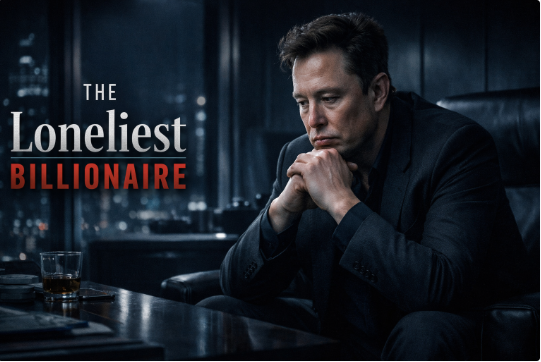
Elon Musk is not happy being the richest man in the world
Money is a megaphone. It amplifies everything—ambition, fear, curiosity, impatience—until the signal becomes hard to separate from the noise. When someone becomes the “richest man in the world,” the megaphone is basically set to stadium volume and pointed at the planet. The person underneath that headline becomes a symbol: of innovation, of excess, of aspiration, of inequality, depending on who’s looking. And yet, symbols don’t sleep, don’t second-guess product roadmaps at 3 a.m., and don’t have to lead thousands of employees through the headwinds of markets, laws, and public scrutiny. People do. That’s why the phrase “Elon Musk is not happy being the richest man in the world” isn’t merely a spicy take—it’s a useful lens for understanding how modern wealth, relentless innovation, and global attention collide in one restless career.
The paradox of the wealth headline
The “richest” label is a scoreboard number, a rolling tally bound to stock prices, valuations, and spreadsheets. It’s an external narrative that shifts with every tick of market sentiment. Happiness, by contrast, is an internal narrative—messier, more private, and poorly captured by indexes. The paradox is that the more the external number rises, the louder the world demands a matching display of contentment. But wealth rankings don’t measure meaning; they measure market exposure. And for a founder-CEO who’s built his reputation on audacious timelines and moonshot goals, the market’s applause can feel beside the point, even like a distraction.
To build rockets, electric cars, humanoid robots, neurotech devices, and city-scale infrastructure is to live on delay. The rewards—technical breakthroughs, mission milestones, products in customers’ hands—arrive years after the first late-night sketches. Monetary windfalls often come sooner, because markets speculate on the future. That gap between when money arrives and when purpose arrives can produce a strange disconnect: immense net worth paired with an acute sense of unfinished business. No surprise, then, that the richest-person headline may land less like a crown and more like a timer: the world expects delivery, now.
Momentum over comfort
Look at the pattern. Every time a company stabilizes, the horizon shifts. Electric vehicles hit scale? Tackle autonomy at the edge of what’s commercially and ethically feasible. Reusable rockets become routine? Turn toward interplanetary transport and the heavy lift required to make it sustainable. Build a social platform at internet scale? Upend its product philosophy, governance, and business model. This is the behavior of a momentum maximalist—someone who finds comfort not in the consolidation of gains but in the velocity of new problems. The psychological fuel here isn’t contentment; it’s tension between what exists and what could exist.
In that frame, “not happy being the richest” reads less like dissatisfaction and more like refusal to let a dollar-sign headline set the compass. When the mission is framed as electrifying the world’s transport, building a multiplanetary species, pushing consumer AI, or reimagining public discourse online, the richest-person medal is adjacent—loud, shiny, and ultimately irrelevant. The compass points toward impact, and impact rarely correlates neatly with net worth graphs.
The treadmill effect—and why wealth doesn’t fix it
Psychologists call it the hedonic treadmill: humans adapt to improved circumstances and reset expectations upward. High achievement escalates the inner bar. For founders, this treadmill is steeper. Each victory teaches that the improbable was possible after all, which tempts the next leap to be even more improbable. The wealth headline risks accelerating the belt underfoot: markets signal that anything is possible because the paper value says so; the founder reads that signal as pressure to convert the paper into reality. Happiness, if it’s tied to the scoreboard, becomes perpetually deferred.
Compounding this effect is the visibility tax. Every product change, regulatory run-in, or ill-timed post earns global commentary. That spotlight isn’t a tranquilizer; it’s a stimulant. It can motivate, but it also keeps the mind in a state of perpetual readiness—fight, build, justify, iterate. The richest label acts as a solvent that dissolves privacy, making even ordinary human missteps fodder for macro narratives. None of this is a recipe for serenity.
Control vs. delegation: the founder’s dilemma
A common path to personal ease is delegation. Yet, for a product-obsessed founder, control is the operating system. Tweaking user experience, obsessing over manufacturing yields, debating cost curves for batteries or launch systems, arguing about content policy or ad models—these are not peripheral; they’re the point. The richest label implies “you could stop now.” The builder’s impulse replies, “stopping is the risk.” When a mission depends on the tight coupling of product vision and execution discipline, stepping back can feel like abandoning the very engine that created the possibility space.
This dilemma is intensified by the portfolio structure: multiple companies, each with existential goals, moving simultaneously. Rockets need cadence, cars need margin, autonomy needs data, robots need embodiment, social platforms need trust, brain-computer interfaces need clinical rigor. In such a matrix, attention is the scarcest resource. Wealth can buy more people, more machinery, more compute—but it cannot mint more hours or more focus. The richest person is still bound to the same 24-hour day.
Markets love myths; missions need maps
Markets are skilled myth-makers. The richest-person story splits into archetypes: genius, villain, visionary, monopolist, disruptor. None captures the mapping work of turning goals into calendars, budgets, and bill of materials. The myth asks for drama; the map asks for discipline. A founder who has to manage supply chain risks, appease regulators, balance balance sheets, and prevent product regressions cannot live just in mythology. Happiness for a map-maker looks different from happiness for a legend. It sounds like a room where smart people argue the physics, the code, the ethics—and then ship.
This is why the external narrative grates. The richest-person headline moves the myth forward; it does little for the map. It turns the day’s work into a morality play: “Will he use his wealth for good?” That’s not a question that helps choose a sensor suite for autonomy, a landing burn profile for a booster, or a content moderation rule that is fair, scalable, and lawful across jurisdictions. If happiness is progress on the map, the myth is interference, however flattering.
Public risk-taking as a core habit
Some leaders protect their reputations by avoiding polarizing moves. Musk’s operating habit skews the other way: test in public, push boundaries loudly, iterate under the lights. That approach turns everything—from platform policy to rocket development—into a real-time spectacle. It has upsides: galvanizing talent, recruiting true believers, and keeping pressure high. It also transmits stress. When setbacks become trending topics, the nervous system doesn’t care that it’s “only PR”; it registers threat. If you tie your identity to the mission, and the mission plays out on a thousand screens, the richest-person label is a poor shield against the emotional costs of always-on exposure.
The gravity of first-principles thinking
Much has been made of first-principles thinking: breaking problems down to the underlying physics or economics and rebuilding from there. It’s a powerful mental model for engineering and cost reduction, but it is not optimized for calm. By definition, first-principles analysis reveals uncomfortable truths: waste, bloat, sentimental attachments to legacy design choices. It asks, relentlessly: what’s the simplest thing that could possibly work? Who will do the hard work? When? At what cost? A mind trained to apply that lens habitually will keep finding gaps between current and ideal. If happiness is acceptance, first-principles is a machine for constructive dissatisfaction.
The richest label and stakeholder expectations
Wealth headlines cascade into stakeholder psychology. Customers expect miracle products at aggressive price points. Investors expect margins that defy commodity logic. Employees expect that their work will be history-making and their compensation life-changing. Regulators expect ironclad compliance at scale, yesterday. Competitors expect you to trip. This pressure cooker is not hypothetical; it’s experienced as daily constraints. Wealth, paradoxically, reduces degrees of freedom: each decision becomes a public precedent. The richest-person status doesn’t remove constraints; it magnifies them by enrolling the entire world as a stakeholder.
Why “not happy” might be a feature, not a bug
For a founder wired to push frontiers, dissatisfaction is diagnostic. It signals that a constraint is worth attacking: cost per kilowatt-hour, launch cadence, training compute per dollar, latency in global communications, brittle supply chains, brittle institutions. This isn’t misery for misery’s sake; it’s strategic restlessness. The end goal may be joyful—cleaner transport, multiplanetary resilience, safer AI, a more open information ecosystem—but the path is paved with stubborn problems. In that sense, “not happy” is the creative tension keeping the flywheel turning. It’s a refusal to let comfort calcify into complacency.
The human substrate
Still, there’s a person inside the meme. People fatigue. They misread a moment, underestimate complexity, or overestimate how quickly culture shifts alongside technology. They also learn, recalibrate, and improve. The richest-person discourse rarely allows for this ordinary human oscillation because it treats identity as brand. A more humane view leaves room for contradiction: you can be both visionary and stubborn, generous and thin-skinned, daring and cautious depending on the domain. Recognizing that ambivalence is not weakness; it’s the condition of doing consequential work under time pressure.
The time horizon mismatch
One more reason the richest label is a poor proxy: it’s tied to quarterly rhythms, whereas the flagship ambitions live on decade-long timelines. Colonizing Mars, rewiring the energy grid, mainstreaming consumer robots, or pioneering brain-computer interfaces are not quarterly projects. They’re civilization-scale arcs. In the gap between the quarterly and the civilizational, the richest-person headline can feel like a scoreboard for the wrong sport—like tallying home runs during a marathon. Satisfaction, in this view, would come from the first sustainable city off Earth, or a fleet of autonomous vehicles that demonstrably reduces global accidents, or AI assistants that measurably boost human flourishing without sacrificing safety. The wealth number is a weather report; the mission is climate.
Lessons for builders and observers
If you’re a builder, the takeaway is uneasy but useful: external validation is unreliable fuel. Build with metrics you control—product quality, safety records, cost curves, customer delight—rather than scoreboard vibes. If you’re an observer, the lesson is to treat the richest-person narrative as a spectacle overlay, not the signal. The signal is shipping. Did the car get better this quarter? Did the rocket land more reliably? Did the platform’s trust and safety improve measurably? Did the AI become more helpful and transparent? These questions cut cleaner than the gyrations of net worth charts.
The ethics layer
Wealth headlines also drag ethics to center stage—which is good. With outsized influence comes outsized responsibility. Safety culture in factories and on launch pads matters. Content governance at platform scale matters. Openness about data collection and model behavior matters. Labor practices and supply chains matter. Environmental impacts matter. If the richest-person story expands public attention to these issues, it can be a constructive pressure. But again, the frame should be performance against explicit standards, not vibes about fortune.
What might satisfaction look like?
For someone structurally motivated by what’s next, satisfaction is probably not a glass of champagne at the top of a wealth list. It’s more like this: batteries that halve cost and double durability; autonomy that passes independent safety benchmarks across diverse geographies; rockets that turn orbital logistics into commercial routine; orbit-to-surface communications that are reliable in disasters and unglamorous contexts; social networks where users feel safe and heard without chilling debate; neurotech therapies that clear rigorous clinical bars; robots that handle not just demos but dull, dirty, and dangerous work reliably.
Satisfaction, in other words, is outcomes at scale. That’s a heavy bar, because it depends on systems outside any single person’s control: regulators, suppliers, geopolitical stability, public trust. Which brings us back to the core thesis: being the richest person is orthogonal to being satisfied when your scoreboard is civilizational.
The culture-shaping role
Regardless of individual contentment, there’s no denying the culture-shaping role here. Millions emulate the first-principles ethos, adopt electric vehicles faster, expect rockets to be reusable, treat software updates in cars as normal, see robotics as near-term rather than sci-fi, and debate the future of speech online with more technical nuance than a decade ago. Culture change is difficult to measure and impossible to price, and yet it’s the source of durable impact. If anything is likely to deliver a sense of meaning to a mission-driven founder, it’s that: watching the world tilt a few degrees toward a different future because you insisted it could.
Why the headline persists anyway
If the richest-person label is such a poor proxy for meaning, why does it persist? Because it’s a narrative shortcut with two seductive features: it’s quantifiable and it’s dramatic. It simplifies a multidimensional life into a top score. It also gives the public an easy moral canvas: celebrate, critique, or both. The trouble is that shortcuts train us to miss the real levers—physics, manufacturing, policy, user experience, incentives. “Not happy” is an invitation to look past the shortcut and pay attention to the machinery of progress, where the real drama lives.
The long game
The long game is the only game that matters if your goals are multi-decade. Wealth lists will reshuffle. Valuations will swell and compress. Reputations will lurch. Meanwhile, gigafactories will rise and fall, launch pads will scorch and cool, code will ship and be refactored, robots will stumble and then walk, and patients will move from trials to therapies. The work will outlast the headlines. For those who watch closely, the interesting question isn’t “Is the richest man happy?” It’s “Did the technology cross the threshold where society can’t imagine going back?”
That’s why the discomfort embedded in the headline may be precisely the point. Comfort is lovely for people; it’s poisonous for missions. The people doing the work deserve rest and recognition. The mission, however, thrives on a steady diet of unsolved problems. If the richest-person crown doesn’t soothe the impulse to keep pushing, that might be the healthiest paradox of all.
Final thought
The headline is a mirror, not a map. It reflects our obsessions with quantifiable power and our unease about inequality. It provokes valid debates about responsibility and excess. But happiness, for a builder obsessed with first principles, isn’t a product of price charts; it’s a lagging indicator of progress. The future either moves or it doesn’t. If it moves, the satisfaction will likely arrive late, quietly, and in the form of functioning systems rather than confetti. If it doesn’t, no number at the top of a list will compensate. That’s the calculus behind the claim: not happy being the richest man in the world—because the goal was never to be the richest. The goal was to bend reality.
SEO keyword paragraph: Elon Musk, richest man in the world, net worth, wealth ranking, billionaire list, innovation, electric vehicles, Tesla, SpaceX, reusable rockets, autonomy, self-driving cars, battery technology, energy storage, solar energy, AI, artificial intelligence, generative AI, robotics, humanoid robot, Neuralink, brain-computer interface, Boring Company, hyperloop, X platform, social media, content moderation, free speech, stock price, market valuation, Bloomberg Billionaires Index, Forbes billionaire list, first-principles thinking, hedonic treadmill, leadership style, founder-CEO, manufacturing, supply chain, cost curves, global expansion, regulatory compliance, safety culture, productivity, engineering culture, startup mindset, disruption, moonshot projects, future of transportation, future of space, multiplanetary, Mars colonization, satellite internet, global connectivity, Starlink, renewable energy, climate tech, sustainability, long-term vision, tech trends, technology news, business strategy, entrepreneurship, innovation strategy, product roadmap, economic impact, ethical AI, data governance, trust and safety, public policy, tech regulation, venture capital, growth strategy, brand reputation, corporate culture, mission-driven leadership, thought leadership, 06-02-2026.